
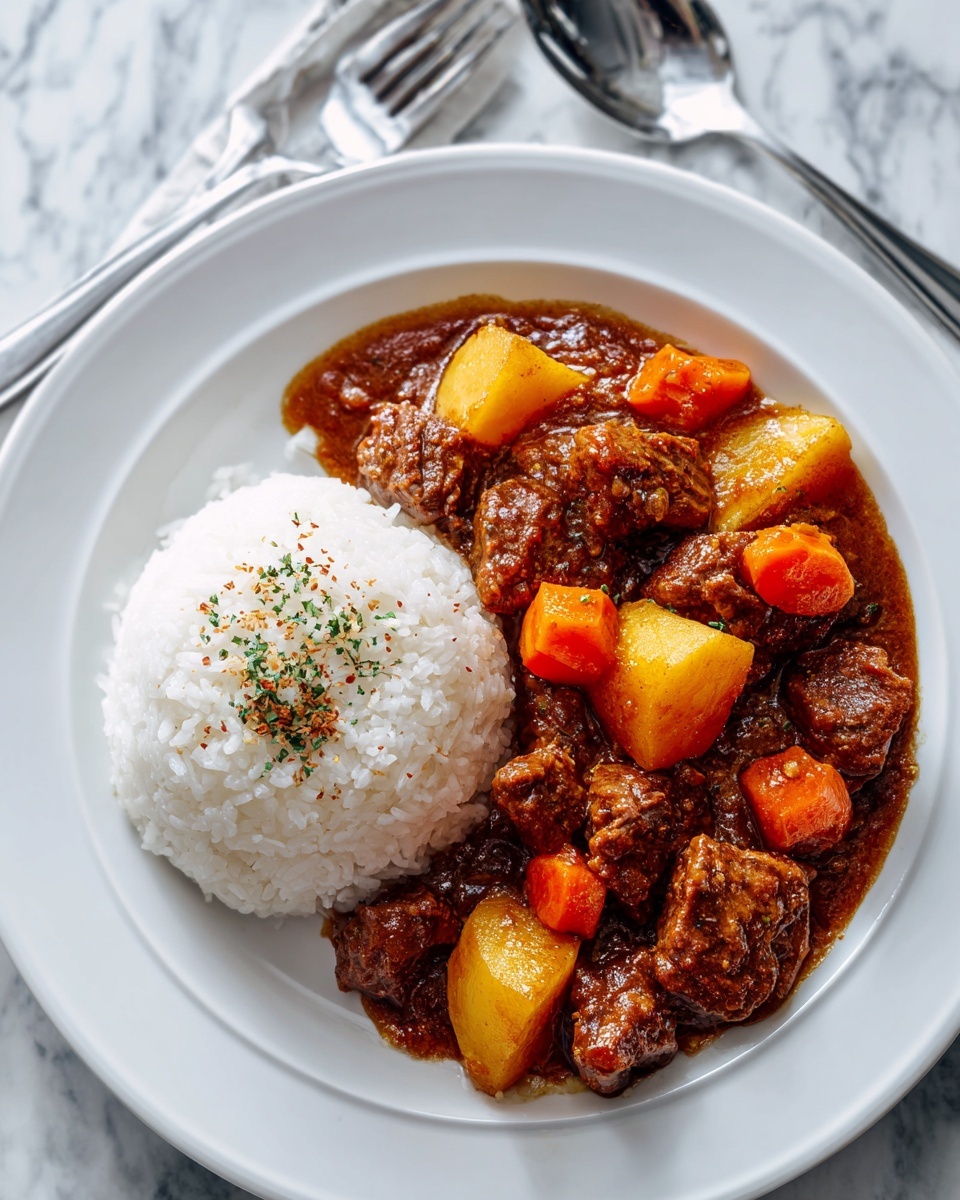
If you have ever craved a comforting, rich, and delightfully aromatic curry, then this Japanese Chicken Curry Recipe is about to become your new go-to favorite. This classic dish balances tender chicken thighs with a fragrant blend of onions, carrots, and potatoes simmered in a luscious, slightly sweet curry sauce made irresistible by grated apple, honey, and a subtle mix of soy sauce and ketchup. It’s not just a meal; it’s a warm hug on a plate that brings the essence of Japanese home cooking right into your kitchen.
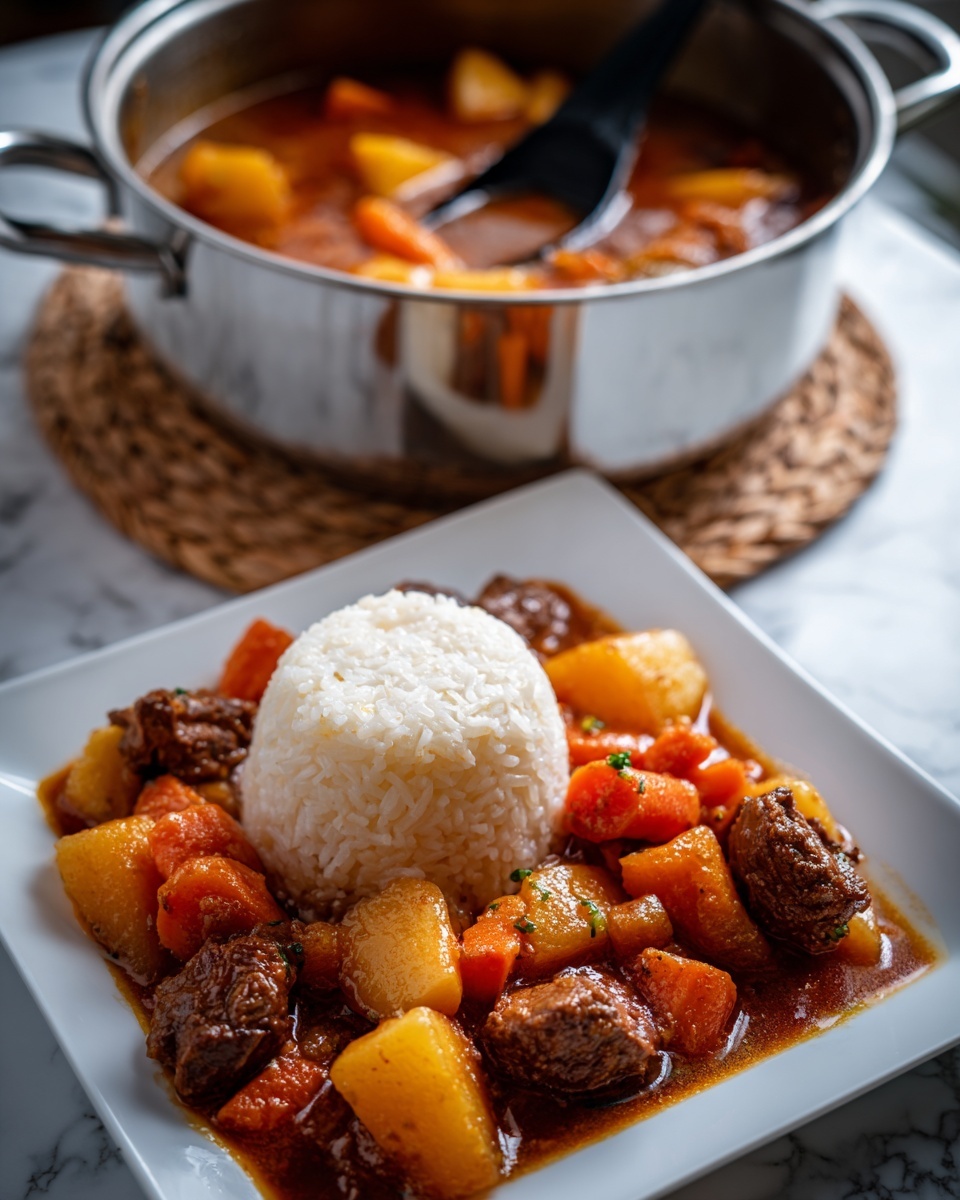
Ingredients You’ll Need
The beauty of this Japanese Chicken Curry Recipe lies in its simplicity and the harmony each ingredient brings to the table. Every element, from the golden potatoes to the grated apple, plays an essential role in creating the perfect balance of flavors, textures, and colors that make this curry so memorable.
- 2 large onions (1.5 lb, 670 g): Provide sweetness and depth with their tender texture when cooked.
- 2 carrots (6.7 oz, 190 g): Add vivid color and gentle earthiness, cut in rolling wedges to absorb the curry’s flavor fully.
- 3 Yukon gold potatoes (15 oz, 432 g): Hold their shape beautifully, creating a satisfying bite and creamy background.
- 1 tsp grated ginger: Offers warmth and a subtle zing, brightening the curry’s complexity.
- 2 cloves garlic: Bring aromatic depth and savory notes that complement the other ingredients perfectly.
- ½ apple (6 oz, 170 g): Grated for a natural sweetness that gently lifts the curry’s flavor.
- 1½ lb boneless, skinless chicken thighs: Tender and juicy, ideal for absorbing the rich curry sauce.
- Freshly ground black pepper: Adds a touch of spice to balance the sweetness.
- 1½ Tbsp neutral oil: Used to sauté the onions tenderly without overpowering the dish.
- 4 cups chicken stock/broth: Creates a savory and luscious cooking liquid for all ingredients.
- 1 Tbsp honey: Enhances the natural sweetness and deepens flavor layers.
- 1 Tbsp soy sauce: Adds umami for that unmistakably savory undertone.
- 1 Tbsp ketchup: Contributes a subtle tang and richness, rounding out the sauce.
- 1 package Japanese curry roux (7–8 oz or 200–230 g): The essential thickening agent and flavor base that gives this dish its signature curry taste.
- Steamed Japanese short-grain rice: Perfect for soaking up the delicious curry sauce.
- Fukujinzuke (optional): Adds a crunchy, tangy contrast that makes every bite exciting.
How to Make Japanese Chicken Curry Recipe
Step 1: Prepare Your Ingredients
First, get everything ready because mise en place makes cooking a breeze. Cut the onions into thick wedges to maintain some texture, peel the carrots and slice them into rolling wedges for maximum flavor absorption, and quarter the Yukon gold potatoes before soaking them in water to remove excess starch. Grate the ginger and apple, mince the garlic, and chop the chicken thighs into bite-sized pieces, seasoning them lightly with freshly ground black pepper. This prep ensures every component cooks evenly and bursts with flavor.
Step 2: Sauté the Aromatics
Heat the neutral oil in a large pot over medium heat and add the onion wedges. Stir them occasionally but not too frequently, so they develop a subtle caramelized color that brings richness to the curry. Once translucent and tender, add the garlic and ginger and let their fragrances bloom, setting a robust foundation for the rest of the dish.
Step 3: Brown the Chicken
Add the chicken pieces to the pot. Keep stirring enough to prevent sticking but let each piece brown slightly, locking in juiciness while contributing a savory depth to the curry base. If the onions begin to brown too much, reduce the heat to maintain a balanced caramelization.
Step 4: Add Liquids and Flavor Enhancers
Pour in the chicken stock or broth, which will nurture the stew with meaty richness. Stir in the grated apple, honey, soy sauce, and ketchup, each adding layers of sweetness, umami, and gentle acidity to perfect the curry’s comforting profile. Toss in the carrots and potatoes last, ensuring they are just covered by the broth for an even simmer.
Step 5: Simmer Until Tender
Cover the pot and let the curry simmer on medium-low heat for about 15 minutes. Keep an eye on it, skimming off any foam with a fine-mesh strainer to keep the sauce clear and clean-tasting. Cooking until the vegetables pierce easily with a skewer ensures that all elements are tender and ready for the roux addition.
Step 6: Incorporate the Curry Roux
Turn off the heat and gradually dissolve the Japanese curry roux in ladlefuls of the cooking liquid before blending it into the pot. This slow incorporation avoids lumps and lets you control thickness perfectly. Then, simmer uncovered while stirring frequently until the sauce thickens into that classic, glossy texture you crave in Japanese curry.
How to Serve Japanese Chicken Curry Recipe
Garnishes
To elevate the experience, serve your curry with a side of fukujinzuke, those vibrant red pickled vegetables that offer a delightful crunch and tangy contrast to the rich curry sauce. A sprinkle of finely chopped fresh herbs, such as parsley or scallions, can also brighten up the dish visually and flavor-wise.
Side Dishes
This warming Japanese Chicken Curry Recipe pairs wonderfully with perfectly steamed short-grain rice, which absorbs every last bit of that luscious sauce. For a balanced meal, consider adding a simple green salad with a light citrus dressing or lightly steamed greens to keep the meal light and nutritious.
Creative Ways to Present
For a fun twist, try serving the curry in a shallow bowl with rice molded into a neat dome or shaped using a small bowl or scoop. You can also top the curry with a soft-boiled egg or crispy fried onions for extra texture. If you want to get playful, try using bento boxes for an adorable, portion-controlled Japanese-inspired lunch.
Make Ahead and Storage
Storing Leftovers
Japanese Chicken Curry only gets better the next day, as the flavors meld beautifully overnight. Store any leftovers in a glass airtight container to prevent staining and keep the curry tasting fresh. It will keep well in the refrigerator for up to three days, making it a perfect meal for busy weeknights.
Freezing
You can freeze the curry for up to a month, but to preserve texture, especially of the potatoes, it’s best to remove them before freezing. When freezing, use a freezer-safe container and leave some space at the top for expansion. Defrost the curry slowly in the fridge for 24 hours before reheating.
Reheating
Reheat gently on low heat to avoid burning, adding a splash of water to loosen the sauce since it thickens and may become paste-like when cold. Stir often and heat until piping hot. If the curry feels too thin, keep the lid off to reduce the sauce to your preferred consistency.
FAQs
Can I use chicken breast instead of thighs?
Absolutely! Chicken breasts can be used, but since they are leaner, be careful not to overcook them as they tend to dry out faster than thighs. Consider adding them later in the cooking process to keep them tender.
What if I don’t have Japanese curry roux?
You can make a homemade roux with butter, flour, and curry powder, although it won’t replicate the exact flavor of store-bought blocks. Alternatively, try finding butter chicken or mild curry powders as a simple substitute, but the authentic roux is worth seeking out for this recipe.
Is this curry spicy?
This Japanese Chicken Curry Recipe is generally mild and sweet, perfect for those who prefer gentle heat. You can adjust the spiciness by adding chili powder or fresh chilies if you like it hotter.
Can I make it vegetarian?
Yes! Replace the chicken stock with vegetable broth and swap chicken thighs for hearty vegetables like mushrooms, eggplant, or tofu. The curry roux will still give you that classic flavor and richness.
Why is apple added to the curry?
The grated apple adds a natural sweetness and subtle fruity depth that balances the savory and umami notes beautifully. It’s a secret ingredient in many Japanese curry recipes that helps create that signature gentle sweetness.
Final Thoughts
This Japanese Chicken Curry Recipe is a heartwarming, soul-satisfying dish that will quickly find a place in your recipe rotation. Its comforting layers of flavor and straightforward preparation make it endlessly rewarding to cook and share. Give it a try and bring a taste of cozy Japanese home cooking to your very own table—you won’t regret it!
PrintJapanese Chicken Curry Recipe
This Japanese Chicken Curry recipe offers a comforting and flavorful dish made with tender chicken thighs, hearty vegetables like carrots and Yukon gold potatoes, and a rich, savory curry sauce enriched with ginger, garlic, apple, honey, soy sauce, and ketchup. The dish is simmered slowly to develop deep flavors and served over steamed Japanese short-grain rice for an authentic home-cooked meal.
- Prep Time: 30 minutes
- Cook Time: 40 minutes
- Total Time: 1 hour 10 minutes
- Yield: 8 servings 1x
- Category: Main Dish
- Method: Stovetop
- Cuisine: Japanese
Ingredients
Vegetables and Fruit
- 2 large onions (1.5 lb / 670 g), cut into thick wedges
- 2 carrots (6.7 oz / 190 g), peeled and cut into rolling wedges (rangiri)
- 3 Yukon gold potatoes (15 oz / 432 g), peeled and quartered (soaked in water 15 minutes)
- ½ apple (6 oz / 170 g), peeled, cored, and grated
Protein
- 1½ lb boneless, skinless chicken thighs, cut into bite-sized diagonal pieces, seasoned with freshly ground black pepper
Spices and Aromatics
- 1 tsp grated ginger
- 2 cloves garlic, minced
Liquids and Sauces
- 1½ Tbsp neutral oil (for cooking)
- 4 cups chicken stock or broth (or water/half stock and half water for lower sodium)
- 1 Tbsp honey
- 1 Tbsp soy sauce
- 1 Tbsp ketchup
Curry Roux
- 1 package Japanese curry roux (7–8 oz / 200–230 g; or homemade Japanese curry roux)
To Serve
- 8 servings cooked Japanese short-grain rice
- Fukujinzuke (Japanese red pickled vegetables) (optional)
Instructions
- Gather Ingredients: Collect all ingredients and note the special additions such as ginger, garlic, apple, honey, soy sauce, and ketchup which add depth to the curry.
- Prepare Vegetables: Cut onions into thick wedges, peel and cut carrots into rolling wedges, peel and quarter potatoes then soak in water for 15 minutes to remove excess starch, and grate peeled, cored apple.
- Prepare Chicken: Trim excess fat from chicken thighs, cut diagonally into bite-sized pieces to maximize surface area for faster cooking, and season with freshly ground black pepper.
- Sauté Onions: Heat neutral oil in a large pot over medium heat, add onion wedges, and cook while stirring occasionally until translucent and tender, about 5 minutes (or additional 5 minutes for more caramelization and flavor).
- Add Aromatics and Chicken: Add minced garlic and grated ginger to the softened onions and mix well. Then add chicken pieces and cook while stirring frequently until no longer pink on the outside. Lower heat if onions are browning too fast.
- Add Liquids and Flavorings: Pour in chicken stock/broth and add grated apple, honey, soy sauce, and ketchup. Stir to combine evenly.
- Add Vegetables: Add carrots and soaked Yukon gold potatoes to the pot ensuring the broth barely covers the ingredients. If using russet potatoes, add them in the last 15–20 minutes of cooking.
- Simmer: Cover and simmer on medium-low heat for 15 minutes, stirring occasionally. Simmer uncovered if ingredients are fully submerged in broth. Skim foam from surface once boiling.
- Continue Cooking: Cook covered until carrots and potatoes are tender when pierced with a wooden skewer.
- Add Curry Roux: Turn off heat, dissolve 1-2 cubes of curry roux in a ladle of cooking liquid then stir into pot. Repeat until all roux is incorporated.
- Thicken Curry: Simmer uncovered on medium-low heat stirring frequently for 5–10 minutes until sauce thickens. Add water if sauce becomes too thick and ensure no roux sticks to pot bottom to prevent burning.
- Adjust Seasoning: If using homemade unsalted curry roux, taste and add 2–4 tsp kosher salt as needed, adjusting for broth and condiment saltiness.
- Serve: Serve curry hot over steamed Japanese short-grain rice. Garnish with fukujinzuke if desired.
- Store and Reheat: Store leftovers in airtight glass container in refrigerator up to 3 days or freeze without potatoes up to 1 month. To reheat, loosen thickened sauce with ½ cup water, warm gently on low heat stirring often.
Notes
- If using homemade curry roux, lightly season chicken with kosher salt before cooking.
- Yukon gold potatoes hold shape well; russet potatoes should be cut smaller and added later to avoid disintegration.
- Carrots cut as rolling wedges (rangiri) absorb flavor faster and cook evenly.
- For lower sodium, substitute chicken broth with water or a mix of both.
- Store leftovers in a glass container to avoid staining and best maintain flavor.
- Frozen curry may alter potato texture; remove potatoes before freezing if desired.
- Stir frequently while simmering curry roux to avoid burning at the pot bottom.
- Fukujinzuke is optional but adds authentic flavor and color.