
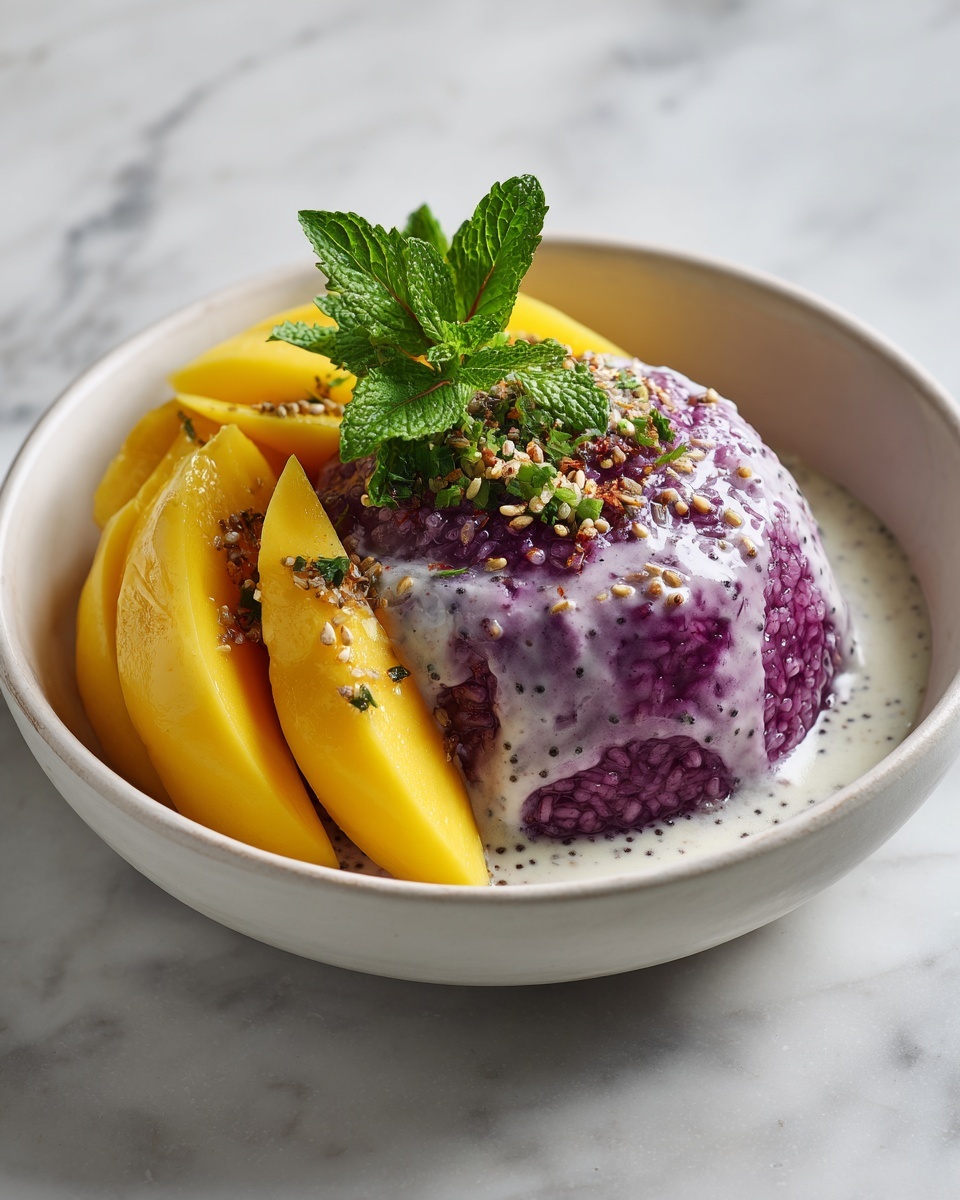
Imagine the vibrant purple hue of ube nestled in creamy, coconut-scented sticky rice mingled with luscious, golden mango slices—the very smell of tropical sunshine filling your kitchen. Every bite bursts with velvety textures and sweet, exotic flavors that transport your taste buds straight to the Philippines. This Mango Ube Sticky Rice: A Tropical Twist on a Classic Treat Recipe is a sensory delight you’ll crave again and again.
Why You’ll Love This Mango Ube Sticky Rice: A Tropical Twist on a Classic Treat Recipe
- Irresistible Flavor Fusion: The marriage of rich coconut, earthy ube, and sweet, juicy mangoes creates a harmony of tastes that’s both nostalgic and refreshingly new.
- Simple Ingredients: Using pantry staples like glutinous rice, full-fat coconut milk, and natural ube spread makes this recipe approachable without sacrificing authenticity.
- Comfortably Classic Method: Steaming the rice to chewy perfection ensures a texture that’s soft yet satisfying—giving you the true Filipino dessert experience.
- Beautiful Presentation: The vibrant purple rice and bright mango slices topped with toasted coconut make this dish as stunning as it is delicious.
- Customizable to Your Taste: Easily adjust the sweetness or add more ube extract to boost the flavor, making it truly your own tropical indulgence.
Why This Mango Ube Sticky Rice: A Tropical Twist on a Classic Treat Recipe Works
The magic behind this dessert lies in a few key techniques and ingredients. First, soaking the glutinous rice for at least 8 hours ensures that satisfyingly chewy texture every sticky rice lover dreams of. The steaming method gently cooks the rice without drying, locking in moisture and creating a translucent, tender bite. The luscious ube halaya combined with coconut milk infuses the dish with that unmistakable purple glow and earthy sweetness, while the thickened coconut sauce adds a creamy finish that ties everything together beautifully.
Ingredients You’ll Need
Dive into the tropical charm with creamy coconut milk, vibrant ube spread, golden mangoes, and the special sticky rice that makes this treat unforgettable.
- 2 cups dry glutinous rice: This special type of rice gives your dish that perfect chewy texture.
- 1 cup full fat coconut milk: Adds rich creaminess that harmonizes beautifully with the sweet flavors.
- 1/2 cup granulated sugar: Sweetens the mix; adjust to your taste for that delightful balance.
- 1/2 teaspoon sea salt: Just a pinch enhances all the flavors; don’t skip it!
- 1 cup ube halaya or ube spread: Gives the dish a stunning purple hue and a hint of earthiness.
- 2-3 drops ube extract: A little goes a long way in boosting the ube flavor.
- 2 tablespoons corn starch: Helps thicken your coconut sauce for a decadent finish.
- 1/2 cup room temperature water: Necessary to dilute the cornstarch and prevent lumps.
- 1/2 cup additional full fat coconut milk: Keeps your sauce rich and delicious.
- 2 large ripe mangoes: Choose sweet, juicy mangoes for the ultimate tropical flavor.
- 1/4 cup toasted coconut: Adds a crunchy texture that complements the creamy elements wonderfully.
Ingredient Substitutions & Tips
- Glutinous Rice: If you can’t find this sticky rice, try sushi rice as a substitute, though the texture won’t be exactly the same.
- Ube Halaya: For a quick fix, ube jam or ube powder rehydrated in coconut milk works beautifully.
- Full Fat Coconut Milk: Avoid light coconut milk as it won’t provide the same rich creaminess essential for this dessert.
- Toasted Coconut: If you don’t have toasted coconut on hand, gently toast unsweetened shredded coconut in a dry skillet until golden.
👨🍳 Pro Tips for Perfect Results
- Soak the rice overnight: This step is the secret to perfectly chewy, tender sticky rice.
- Use full fat coconut milk: It makes the dish luxuriously creamy—don’t skimp!
- Dilute cornstarch well: Mixing it with room temperature water before adding prevents any lumps in your sauce.
- Fresh mangoes matter: Choose ripe but firm mangoes to balance sweetness and texture.
- Don’t skip the salt: A pinch amplifies all flavors and keeps sweetness from becoming cloying.
How to Make Mango Ube Sticky Rice: A Tropical Twist on a Classic Treat Recipe
Step 1: Preparation Steps
Rinsing the dry glutinous rice multiple times until the water runs nearly clear is essential to remove excess starch. Then soak the rice overnight, anywhere from 8 to 24 hours—this soaking results in the most tender and perfectly chewy sticky rice.
💡 Pro Tip: Don’t rush the soak; patience here rewards you with ideal texture.
Step 2: Drain and Steam
Once soaked, drain the rice and lay it carefully on a bamboo steamer lined with parchment paper. This traditional method ensures even steam circulation for that classic sticky rice softness.
💡 Pro Tip: Parchment paper prevents sticking and makes cleanup a breeze.
Step 3: Steam Rice
Steam the rice for 20 to 25 minutes until it turns slightly translucent and feels chewy but cooked through—this is where all that pre-soaking pays off.
💡 Pro Tip: Check for doneness by tasting a small grain; it should be tender but not mushy.
Step 4: Cook Coconut Mixture
Heat 1 cup of full-fat coconut milk with sugar and salt on medium-high heat. Let it simmer so the sugar dissolves completely, then reduce heat and stir gently to combine the flavors.
💡 Pro Tip: Stir frequently to prevent scorching and preserve coconut’s smoothness.
Step 5: Add Ube
Mix in the vibrant ube halaya or ube spread along with 2-3 drops of ube extract. This infusion delivers that luscious purple color and the distinct earthy sweetness that ube is beloved for.
💡 Pro Tip: Adjust the extract carefully—it intensifies flavor quickly!
Step 6: Combine Rice and Coconut Mixture
Fold the steamed sticky rice into the coconut-ube mixture, cooking for about 4 minutes until the rice absorbs the creamy goodness and thickens slightly.
💡 Pro Tip: Stir gently to avoid breaking the grains while ensuring even coating.
Step 7: Cool Mixture
Turn off the heat and allow the mixture to rest for 5 minutes. This brief pause lets flavors meld and the texture settle perfectly before serving.
💡 Pro Tip: Cooling also helps the sticky rice firm up a bit for easier plating.
Step 8: Prepare Coconut Sauce
In the same pan, add half a cup of coconut milk and sugar, bringing it to a boil before lowering the heat to a gentle simmer.
💡 Pro Tip: Using the same pan captures leftover flavors—no drop wasted!
Step 9: Thicken Sauce
Dilute the cornstarch with 2 teaspoons of room temperature water to avoid lumps, then stir this mixture slowly into the simmering coconut sauce until it thickens beautifully.
💡 Pro Tip: Keep stirring constantly to achieve a silky sauce texture.
Step 10: Prepare Mangoes
Peel the ripe mangoes and slice them into quarters, then cut into thin 1/4-inch strips for the perfect balance of juicy sweetness and easy-to-eat presentation.
💡 Pro Tip: Use a sharp knife for clean cuts and uniform slices.
Step 11: Serve
Plate your mango ube sticky rice alongside the mango slices, sprinkle with toasted coconut for crunch, and generously drizzle with the luscious coconut sauce. This finish brings texture, flavor, and beauty together in each bite.
💡 Pro Tip: Serve slightly warm or at room temperature to best enjoy the creamy and fresh contrasts.
Common Mistakes to Avoid
Learn from these common pitfalls to make your Mango Ube Sticky Rice flawless:
- Skipping the soak: Without soaking, your rice will be hard and less chewy.
- Using light coconut milk: Results in a bland, less creamy dish.
- Not diluting cornstarch: Leads to a lumpy, uneven coconut sauce.
- Overcooking the rice: Causes mushy sticky rice that loses texture.
- Adding too much sugar: Over-sweetening masks the delicate ube flavor.
- Not toasting coconut: Misses out on that pleasant crunch and nutty aroma.
Delicious Variations to Try
Once you’ve mastered this Mango Ube Sticky Rice: A Tropical Twist on a Classic Treat Recipe, you can have fun customizing it to your liking:
Dragon Fruit Delight
Add slices of fresh dragon fruit alongside mango for a pop of color and a mild, refreshing sweetness that complements the ube perfectly.
Matcha Infusion
Sprinkle a little matcha powder onto the coconut sauce for a subtle earthy note that pairs wonderfully with the creamy sticky rice.
Jackfruit Topping
Swap out mango for ripe jackfruit slices for a twist with tropical richness and chewy texture contrasts.
Chia Seed Crunch
Sprinkle toasted chia seeds on top for an extra layer of crunch and a nutritional boost.
Toasted Sesame Seeds
Replace toasted coconut with toasted sesame seeds to add a nutty flavor and delightful texture variation.
How to Serve Mango Ube Sticky Rice: A Tropical Twist on a Classic Treat Recipe
Garnishes
Enhance this dessert with a generous sprinkle of toasted coconut flakes and a mint sprig to brighten the plate.
Side Dishes
Pair with a light, refreshing green tea or a sweet calamansi juice to balance the richness of the sticky rice.
Creative Ways to Present
Serve the sticky rice in individual banana leaf cups or colorful ramekins for an authentic and festive experience. Layer mango slices decoratively on top to make it visually irresistible.
Make Ahead and Storage
Make-Ahead Instructions
You can soak the glutinous rice up to 24 hours in advance, and prepare the coconut-ube mixture a few hours before serving. Store separately to preserve texture.
Storage
Keep leftover sticky rice in an airtight container in the refrigerator for up to 2 days. Store fresh mango slices and coconut sauce separately to maintain freshness.
Freezing
Freezing is not recommended, as it can alter the sticky rice texture and mangoes become mushy upon thawing.
Reheating
Gently warm the sticky rice over low heat or steam to revive creaminess without drying it out. Mangoes should be served fresh, not reheated.
Expert Tips for Success
- Use a bamboo steamer lined with parchment paper: Ensures even cooking and prevents sticking.
- Adjust sugar after cooking: Taste as you go to find your perfect sweetness balance.
- Choose ripe, firm mangoes: They provide sweetness without becoming mushy on the plate.
- Don’t skip resting the sticky rice mixture: It helps to set texture and allows flavors to meld.
- Taste test your coconut sauce: Make sure it’s not too thick or too thin—aim for silky.
- Be gentle when folding rice into ube mixture: To keep grains intact for an appealing presentation.
- Serve slightly warm or room temperature: This brings out the best contrast between creamy rice and fresh mango.
Frequently Asked Questions
Can I use regular rice instead of glutinous rice?
Regular rice won’t have the sticky, chewy texture essential for this dessert. Glutinous rice is vital for authenticity and mouthfeel.
How long should I soak the sticky rice?
For the best texture, soak the rice for at least 8 hours and up to 24 hours before cooking.
Can I prepare the coconut sauce in advance?
Yes, you can make the coconut sauce ahead, but reheat it gently before serving to keep it smooth and warm.
Is ube extract necessary?
While optional, a few drops of ube extract enhance the flavor and deepen the color of your sticky rice.
How do I know when the sticky rice is done steaming?
It should be slightly translucent, tender, and chewy but not mushy. Taste testing a grain is the best way to check.
Can I use canned mango slices instead of fresh?
Fresh mangoes are preferred for their texture and flavor, but if using canned, drain well and serve chilled.
Can this recipe be made vegan?
Yes, it already is vegan-friendly using plant-based coconut milk and no animal products.
Final Thoughts
Sharing this Mango Ube Sticky Rice: A Tropical Twist on a Classic Treat Recipe feels like handing you a slice of tropical paradise wrapped in creamy, colorful comfort. The balance of textures and flavors—from chewy rice, velvety ube, luscious mango, to crunchy toasted coconut—creates magic on your palate. I encourage you to try this at home, savor each bite, and let the warm flavors transport you to a sunlit Filipino dessert table. This unique twist on a classic treat is sure to become a beloved favorite in your collection.
PrintMango Ube Sticky Rice: A Tropical Twist on a Classic Treat Recipe
Mango Ube Sticky Rice is a delicious tropical twist on a classic Filipino dessert combining chewy glutinous rice infused with creamy ube and coconut flavors, topped with fresh ripe mangoes and toasted coconut for added texture.
- Prep Time: 10 minutes
- Cook Time: 30 minutes
- Total Time: 8 hours 40 minutes
- Yield: 4 servings 1x
- Category: Dessert
- Method: Steaming
- Cuisine: Filipino
- Diet: Vegetarian
Ingredients
Ingredients
- 2 cups dry glutinous rice (This special type of rice gives your dish that perfect chewy texture.)
- 1 cup full fat coconut milk (Adds rich creaminess that harmonizes beautifully with the sweet flavors.)
- 1/2 cup granulated sugar (Sweetens the mix; adjust to your taste for that delightful balance.)
- 1/2 teaspoon sea salt (Just a pinch enhances all the flavors; don’t skip it!)
- 1 cup ube halaya or ube spread (Gives the dish a stunning purple hue and a hint of earthiness.)
- 2–3 drops ube extract (A little goes a long way in boosting the ube flavor.)
- 2 tablespoons corn starch (Helps thicken your coconut sauce for a decadent finish.)
- 1/2 cup room temperature water (Necessary to dilute the cornstarch and prevent lumps.)
- 1/2 cup additional full fat coconut milk (Keeps your sauce rich and delicious.)
- 2 large ripe mangoes (Choose sweet, juicy mangoes for the ultimate tropical flavor.)
- 1/4 cup toasted coconut (Adds a crunchy texture that complements the creamy elements wonderfully.)
Instructions
- Preparation Steps Rinse the dry glutinous rice 3-4 times until the water runs almost clear. Soak the rice overnight for at least 8-24 hours to achieve the perfect texture.
- Cooking the Rice Drain the soaked rice and place it on a bamboo steamer lined with parchment paper.
- Steaming Steam the rice for 20-25 minutes until cooked, slightly translucent, and chewy.
- Making Coconut-Ube Mixture In a large pan, heat 1 cup of full-fat coconut milk over medium-high heat. Add sugar and salt, simmer, then lower heat and stir until dissolved.
- Adding Ube Mix in the ube halaya or ube spread, along with the ube extract if using, into the coconut milk.
- Combining Rice and Coconut Mixture Add the steamed rice to the coconut mixture and cook for about 4 minutes until the rice absorbs the coconut milk and thickens a bit.
- Cooling Turn off the heat and let the mixture cool for 5 minutes.
- Preparing Coconut Sauce In the same pan, add another 1/2 cup of coconut milk and sugar, cooking until boiling, then reduce the heat to low.
- Thickening Sauce Dilute the cornstarch with 2 teaspoons of room temperature water, then stir it into the coconut sauce until thickened.
- Preparing Mangoes Peel the mangoes and slice them into quarters, then cut into 1/4-inch thick strips.
- Serving Portion the mango ube sticky rice and mangoes on plates, top with toasted coconut, and drizzle with the coconut sauce.
Notes
- Soaking the rice overnight is essential to achieve that perfect chewy texture.
- A little goes a long way with the ube extract, so 2-3 drops are sufficient.
- Use ripe, sweet mangoes for the best tropical flavor.
- Toasted coconut adds a lovely crunchy texture that complements the creamy rice and sauce.