
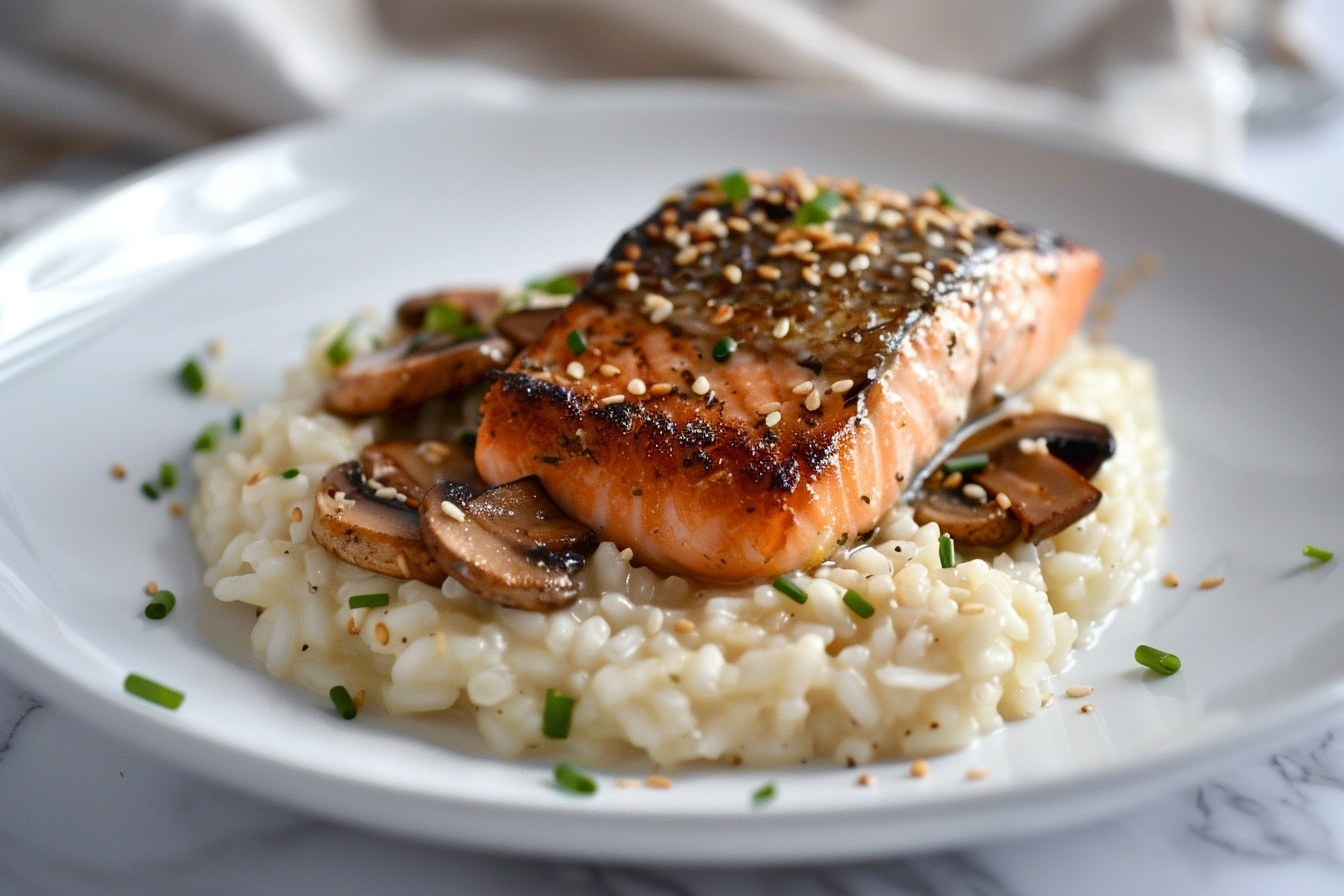
Picture this: the rich aroma of shiitake mushrooms sizzling gently in olive oil fills your kitchen, soon joined by the tantalizing scent of seared salmon. This Japanese-Style Risotto with Seared Salmon Recipe is a warm and elegant celebration of comforting flavors and textures. Creamy miso-infused risotto meets the delicate, flaky salmon in a dish that’s as visually stunning as it is delicious.
Why You’ll Love This Japanese-Style Risotto with Seared Salmon Recipe
- Perfectly balanced flavors: The umami from shiitake mushrooms and miso paste complements the rich, seared salmon for a harmonious bite every time.
- Simple ingredients: Using pantry staples like rice, chicken broth, and soy sauce, this recipe doesn’t require anything exotic but delivers extraordinary taste.
- Great for weeknights: With a total time of around 1 hour and a straightforward stovetop method, you can serve an impressive dinner without stress.
- Elegant presentation: The salmon fillets rest atop the creamy risotto, sprinkled with sesame seeds and fresh chives to dazzle your guests.
- Customizable to your preference: This recipe is a flexible canvas—swap shiitakes for other mushrooms or adjust the marinade for unique flavor twists.
Why This Japanese-Style Risotto with Seared Salmon Recipe Works
This recipe combines expert techniques and thoughtful ingredient choices that make it a standout. The use of shiitake mushrooms infuses deep earthiness into the risotto, while the addition of white miso paste adds a subtle salty richness that transforms the dish. Cooking the risotto slowly by adding warm chicken broth ladle by ladle ensures a perfectly creamy texture without overcooking the rice. Meanwhile, marinating the salmon in soy sauce, dry white wine, and brown sugar gifts it a delicate savory-sweet crust after searing. These elements, paired with precise stovetop timing, create a balanced and satisfying meal every time.
Ingredients You’ll Need
Gather together a beautiful assembly of ingredients that bring Japanese flair and comforting creaminess to this dish. From the hearty shiitake mushrooms to the fragrant garlic and subtle miso paste, everything has a role to play.
- 3 tbsp olive oil (divided): For sautéing mushrooms, vegetables, and sealing in salmon flavor.
- 10.5 ounces shiitakes (torn into pieces): Adds meaty, earthy depth perfect for risotto.
- 1 tbsp low sodium soy sauce: Enhances umami in both marinade and risotto layers.
- 1 small yellow onion (diced): Provides a sweet, aromatic base.
- 1 celery stalk (diced): Brings a fresh, slightly crunchy texture.
- 1 garlic clove (minced): Offers a subtle pungency to round out flavors.
- 1 cup rice (like sushi rice or Arborio): The creamy base of the risotto.
- ¼ cup dry white wine (or sake): Adds brightness and depth to the risotto.
- 5 cups hot chicken broth: Slowly absorbed for rich, tender rice.
- 1 tbsp white miso paste: Delivers a savory twist that sets this risotto apart.
- Black pepper (for serving): For a touch of heat at the finish.
- Chives (for serving): Fresh color and mild oniony flavor.
- Sesame seeds (for serving): Adds delightful nuttiness and crunch.
- Salmon Marinade: 5 tbsp low sodium soy sauce, 1 tbsp dry white wine, 1 tsp brown sugar to infuse delicate sweetness and saltiness.
- 4 skinless salmon fillets: The star protein, flaky and rich once seared.
- 1 tbsp olive oil, 1 tbsp unsalted butter: For that perfect golden crust on the salmon.
Ingredient Substitutions & Tips
- Shiitake mushrooms: Replace with cremini or button mushrooms for a milder flavor.
- Dry white wine: Swap with sake or additional chicken broth if you prefer alcohol-free.
- Salmon fillets: Use trout or white fish fillets as a lighter alternative.
- White miso paste: Try yellow miso for a slightly different but still rich umami flavor.
👨🍳 Pro Tips for Perfect Results
- Marinate the salmon: Letting it soak for at least 20 minutes deepens flavor and tenderizes the fish.
- Use warm broth: Adding hot broth prevents the rice temperature from dropping, ensuring even cooking.
- Stir regularly: Stirring releases the starch from the rice, giving that signature risotto creaminess.
- Don’t overcrowd the pan: When sautéing mushrooms, give them space to brown rather than steam for better flavor.
- Rest salmon briefly: After searing, let the salmon rest for a few minutes to lock in juices.
How to Make Japanese-Style Risotto with Seared Salmon Recipe
Step 1: Seasoning
We start by marinating those beautiful salmon fillets. Combine soy sauce, white wine, and brown sugar in a shallow dish and coat each fillet generously on both sides. Set them aside and let the magic of marination begin!
💡 Pro Tip: Marinate for at least 20 minutes to maximize flavor infusion without overpowering the fish.
Step 2: Chopping
While your salmon is soaking up the marinade, get your mise en place ready. Tear the shiitakes into bite-sized pieces, finely dice the celery and onion, and mince your garlic clove. This prep work makes the cooking flow effortlessly.
💡 Pro Tip: Uniform chopping ensures even cooking and a beautiful texture in your risotto.
Step 3: Sautéing
Heat a tablespoon of olive oil in a heavy skillet over high heat and toss in the shiitakes. Watch them release their moisture and then begin to brown as you add a second tablespoon of oil. Finish with a dash of soy sauce and a minute more of cooking to pack in flavor. Remove and set aside.
💡 Pro Tip: Browning the mushrooms deeply enhances the umami notes in your risotto.
Step 4: Cooking
Reduce the heat to medium low and add more olive oil. Toss in your diced celery, onion, and garlic, cooking just until fragrant, about 2 minutes. Add your rice, toasting it for a minute before deglazing the pan with white wine, scraping up those lovely browned bits with a wooden spoon. This builds rich layers of flavor for the risotto base.
💡 Pro Tip: Toasting the rice adds nuttiness and helps develop that signature risotto texture.
Step 5: Simmering
Now comes the heart of risotto making: ladling warm chicken broth in batches. Add two ladles at a time, stirring frequently until the liquid mostly absorbs before adding more. This patient process continues about 15 minutes, bringing the rice to just shy of al dente. Stir in the shiitakes, then gently dissolve the miso paste in hot broth and fold it into your risotto. Simmer another 5 minutes, adding broth as needed for perfect creaminess.
💡 Pro Tip: Keep the broth hot to maintain cooking temperature and encourage creamy release of starch.
Step 6: Searing
Meanwhile, heat olive oil and butter in a non-stick skillet over medium high. Place the marinated salmon skinless fillets in the pan and sear for about 4 minutes on each side, developing a golden crust while keeping the interior tender and juicy.
💡 Pro Tip: Use a non-stick skillet for easy turning and a flawless sear without sticking.
Step 7: Serving
Plate the creamy risotto and crown each portion with a perfectly seared salmon fillet. Sprinkle freshly ground black pepper, chopped chives, and toasted sesame seeds over the top for a final burst of color and flavor. Dive in and savor every luscious bite!
💡 Pro Tip: Serve immediately to enjoy the risotto’s creamy texture and salmon at its juiciest.
Common Mistakes to Avoid
Learn from these common pitfalls to make your Japanese-Style Risotto with Seared Salmon flawless:
- Overcooking the salmon: It dries out quickly, so stick to 4 minutes per side to keep it moist and tender.
- Not stirring enough: Risotto needs frequent stirring to release the rice’s starch for that velvety finish.
- Adding cold broth: This shocks the cooking process and affects rice texture; always use warm broth.
- Skipping the mushroom browning step: You miss out on deep umami flavor that defines this dish.
- Rushing the simmering stage: Patience is key for perfectly cooked, creamy risotto.
- Neglecting to rest the salmon: Serving immediately after cooking can cause juices to escape onto the plate.
Delicious Variations to Try
Once you’ve mastered the classic Japanese-Style Risotto with Seared Salmon Recipe, feel free to experiment with flavors and textures to keep it fresh and exciting.
Mushroom Medley Risotto
Swap shiitakes for a combination of oyster, cremini, and enoki mushrooms for a more complex earthy profile without compromising the essence of this dish.
Ginger-Infused Salmon
Add freshly grated ginger to the marinade for a zingy warmth that pairs beautifully with the savory risotto base.
Spinach and Pea Risotto
Stir in fresh spinach and peas near the end of cooking for a vibrant pop of color and sweetness, adding a fresh twist without overpowering the delicate salmon.
Matcha Salt Garnish
Finish your dish by sprinkling a pinch of matcha green tea powder mixed with sea salt to add an elegant bitter note and a touch of visual flair.
Citrus Soy Glaze Salmon
Brush a glaze of soy sauce mixed with yuzu or lemon juice on your salmon before searing to enhance the citrusy brightness and layer flavors.
How to Serve Japanese-Style Risotto with Seared Salmon Recipe
Garnishes
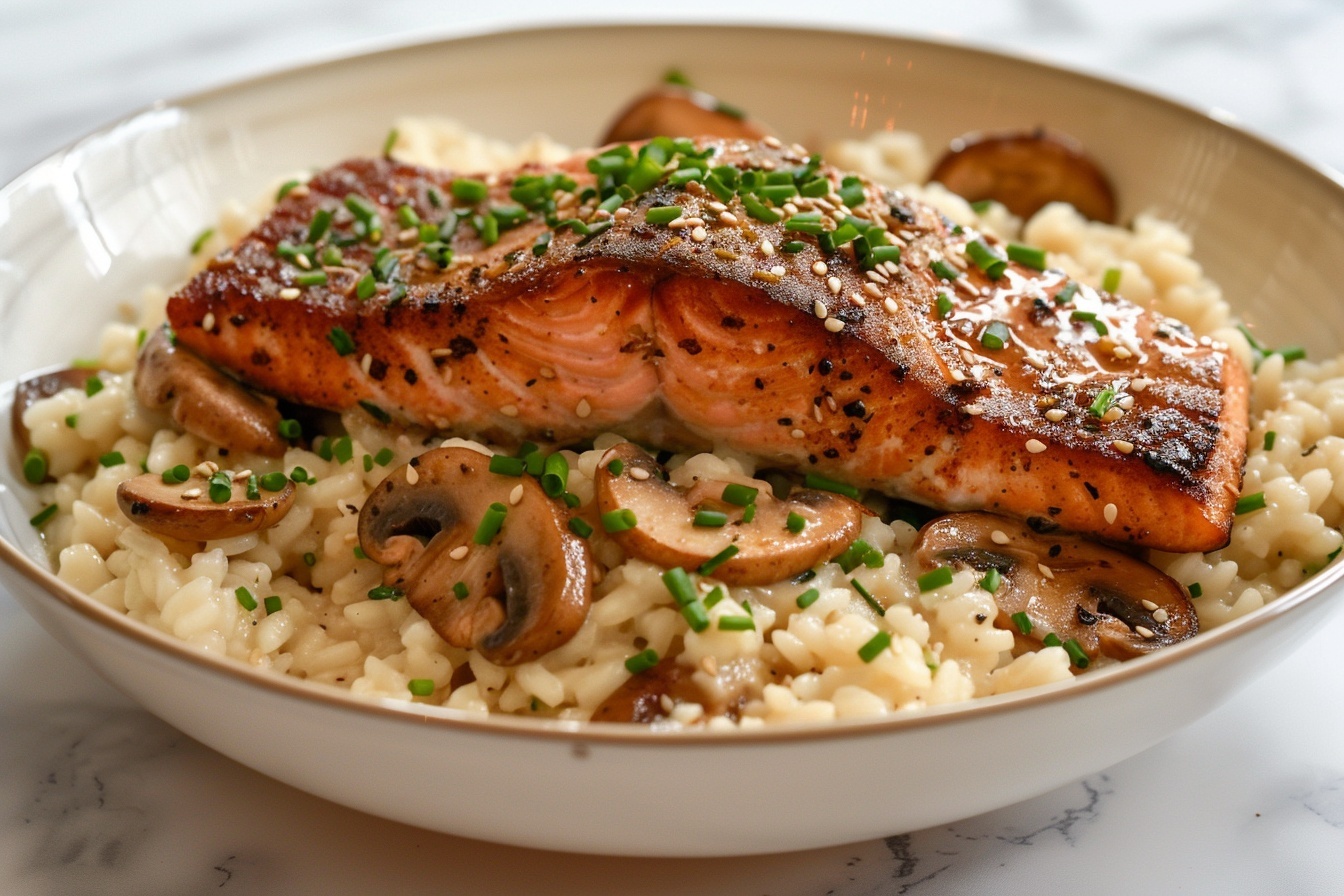
Elevate your dish by adding freshly chopped chives and a sprinkling of toasted sesame seeds for nutty crunch, plus a grind of black pepper for mild heat. A wedge of lemon on the side brightens every bite.
Side Dishes
This dish pairs wonderfully with a crisp cucumber salad or lightly dressed mixed greens to contrast the creamy richness. Steamed baby bok choy or snap peas also complement the Japanese flavors beautifully.
Creative Ways to Present
For a stunning dinner plate, mound the risotto in the center and lay the salmon fillet elegantly on top. Use a drizzle of soy sauce reduction or a sesame oil vinaigrette around the edges and scatter microgreens for a restaurant-quality touch.
Make Ahead and Storage
Make-Ahead Instructions
You can prepare the risotto base and marinate the salmon up to 1 day in advance. Keep the risotto refrigerated and gently reheat with a splash of broth to revive creaminess before finishing the salmon fresh.
Storage
Store leftover risotto and cooked salmon in airtight containers in the refrigerator for up to 2 days. Salmon is best eaten fresh but can be safely kept chilled for short-term enjoyment.
Freezing
While storing risotto in the freezer is possible, the texture may change upon thawing. We recommend avoiding freezing the salmon to preserve its delicate taste and texture.
Reheating
Rewarm the risotto gently over low heat on the stovetop with added chicken broth to restore moisture and creaminess. The salmon is best reheated briefly in a pan or eaten cold to maintain flavor.
Expert Tips for Success
- Use a heavy-bottomed pan: It distributes heat evenly, preventing the rice from burning during simmering.
- Prep all ingredients before starting: Risotto requires your full attention, so have everything ready to go.
- Keep the broth simmering: Adding cold broth interrupts cooking and results in uneven texture.
- Be patient with risotto: Rushing the ladle-by-ladle broth absorption can lead to undercooked or mushy rice.
- Don’t forget to season at the end: Taste and adjust salt or pepper before serving for the perfect balance.
- Use fresh salmon: The quality of fish directly impacts the dish’s final flavor and texture.
- Let the salmon rest after searing: This retains its juices and keeps it moist.
Frequently Asked Questions
Can I use a different type of rice for this risotto?
Yes! Sushi rice or Arborio rice both work beautifully because of their starch content, which helps create that creamy risotto texture.
Is white wine necessary for the risotto?
Not strictly. You can substitute with sake or even chicken broth, but the wine adds a layer of acidity and brightness that lifts the dish.
What if I don’t have miso paste?
Miso paste contributes savory depth, but if you don’t have it, add a splash of soy sauce or a pinch of mushroom powder to enhance umami.
Can I make this recipe vegetarian or vegan?
To make it vegetarian, swap chicken broth for vegetable broth and omit the salmon. Vegan versions would also require substituting butter with plant-based fats.
How do I know when the risotto is done?
The rice should be tender but still have a slight bite (al dente). The texture should be creamy but not mushy.
Can I use salmon with skin on?
Yes, but skinless fillets sear more evenly. If using skin-on, crisp it separately or sear skin-side down longer to render the fat.
How long should I marinate the salmon?
About 20 minutes is enough to infuse flavor without compromising the salmon’s delicate texture.
Final Thoughts
Making this Japanese-Style Risotto with Seared Salmon Recipe is like inviting a touch of elegance and comfort to your table all in one dish. The blend of creamy miso-infused risotto with tender seared salmon creates a truly memorable meal you’ll want to make again and again. Whether you’re cooking for a special occasion or treating yourself on a cozy night in, this dish promises warmth, satisfaction, and a fantastic flavor journey. So gather your ingredients, embrace the stir, and enjoy every bite!
PrintJapanese-Style Risotto with Seared Salmon Recipe

This Japanese Style Risotto with Seared Salmon combines creamy, umami-rich risotto infused with shiitakes and miso, topped with perfectly seared salmon fillets for a flavorful and satisfying meal.
- Prep Time: 10 minutes
- Cook Time: 30 minutes
- Total Time: 40 minutes
- Yield: 4 servings 1x
- Category: Main Course
- Method: Stovetop
- Cuisine: Japanese
- Diet: Gluten Free
Ingredients
Risotto
- 3 tbsp olive oil (divided)
- 10.5 ounces shiitakes (torn into pieces)
- 1 tbsp low sodium soy sauce
- 1 small yellow onion (diced)
- 1 celery stalk (diced)
- 1 garlic clove (minced)
- 1 cup rice (like sushi rice or Arborio)
- 1/4 cup dry white wine (or sake)
- 5 cups hot chicken broth
- 1 tbsp white miso paste
- black pepper (for serving)
- chives (for serving)
- sesame seeds (for serving)
Salmon Marinade
- 5 tbsp low sodium soy sauce
- 1 tbsp dry white wine
- 1 tsp brown sugar
- 4 skinless salmon fillets
For Searing Salmon
- 1 tbsp olive oil
- 1 tbsp unsalted butter
Instructions
- seasoning
We start by marinating the salmon fillets. In a shallow dish, combine soy sauce, white wine and brown sugar. Add salmon fillets, coat both sides. Set aside to marinate. - chopping
In the meantime, tear the shiitakes into small pieces, finely dice the celery stalk, mince the garlic and finely chop the onion. - sautéing
Heat 1 tablespoon oil over high in a heavy bottomed pot or skillet. Add shiitakes and cook until they release their moisture. Add 1 tablespoon oil and cook until they start to brown. Stir in soy sauce and cook for 1 minute more. Remove from skillet. - cooking
Reduce heat to medium low and add 1 tablespoon oil. Then add the celery, onion and garlic. Cook for 2 minutes until fragrant. Add rice and toast for 1 minute. Deglaze with white wine, simmer for 2 minutes while scraping up the brown bits from the bottom of the skillet using a wooden spoon. - simmering
Add 2 ladles chicken broth at a time, stirring frequently, until the broth has been almost completely absorbed before adding the next 2 ladles. Cook until the rice is almost al dente, about 15 minutes. It’s possible that you don’t need to use up all of the broth. Stir in shiitakes. Dissolve miso with 2 tablespoons hot broth and add to risotto. Simmer about 5 minutes until the risotto is ready, add more broth if needed. - searing
In the meantime, prepare the salmon. Heat oil and butter over medium high in a nonstick skillet. Add salmon and sear 4 minutes per side. - serving
Serve salmon over risotto, top with black pepper, chives and sesame seeds. Enjoy!